


Pictured: A Group of Navvies (www.pinterest.com)
The first reservoir to be built, which would eventually become part of the Rivington Reservoir System, was the Chorley (High Bullough) Reservoir.
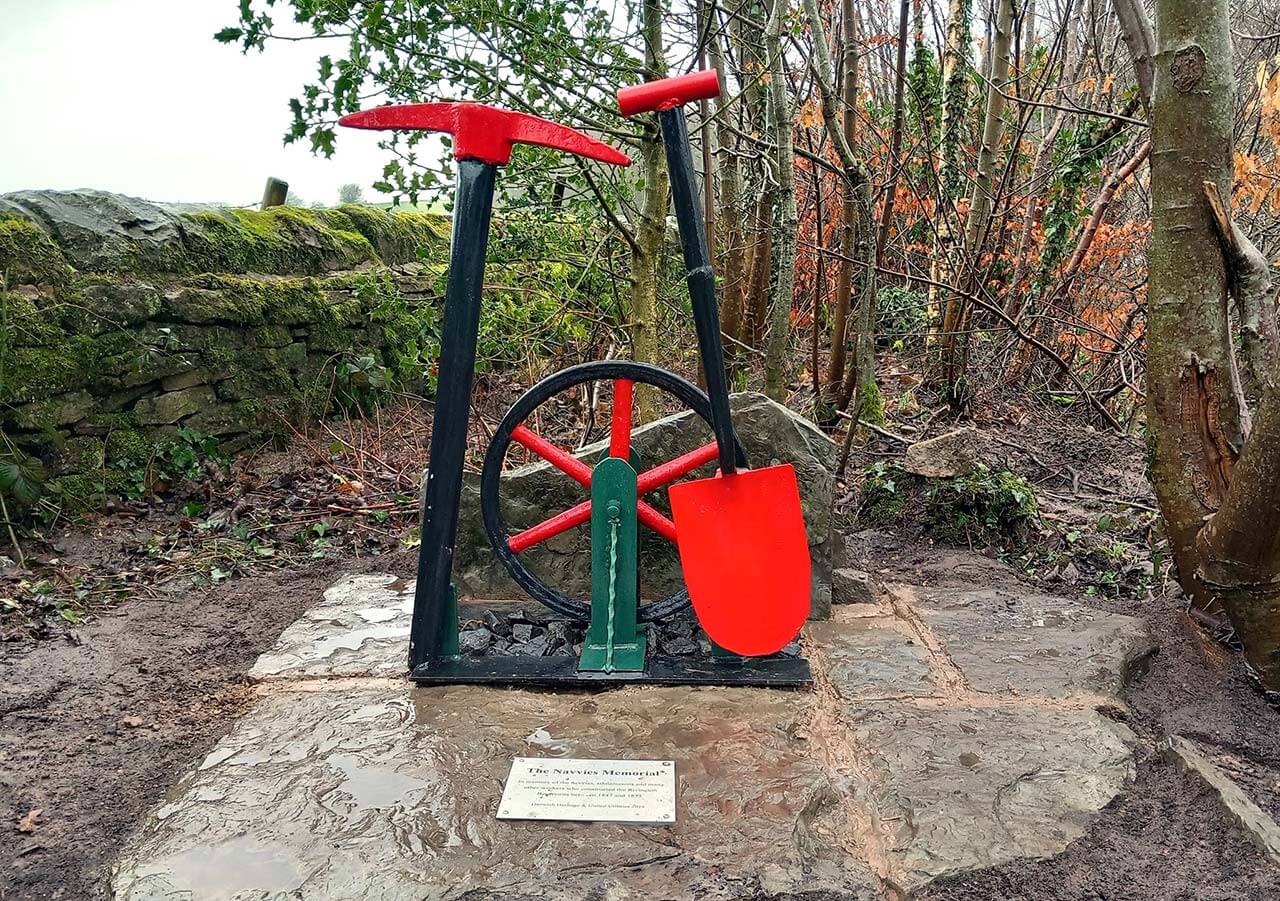
The first sod was cut on Wednesday 7th April 1847 by Richard Anyon who was joined by many more pick’s and shovels all in the hands of the ‘Navvies’. The name navvies was shortened from ‘navigator’ due to their involvement in the mass canal building across the country in the 18th and early 19th century, with a ‘navigation’ being a then common term for a canal. Later the navvies became skilled in railway building, tunnelling and reservoir construction across Great Britain.
The presence of the navvies and other workers in the wider Rivington and Anglezarke areas would last for at least 28 years when in 1875 the Yarrow, being the last of the Rivington chain of reservoirs, was completed.
Thousands of navvies would have been employed at the peak of the reservoirs building, hardworking and hard drinking men who worked with pick’s, shovels and wheelbarrows etc, no mechanical diggers in those days. The only help would be the horse and cart, gunpowder when required, plus block and tackle equipment for some lifting. 700 men were said at one point to be employed and working on the Yarrow Reservoir alone.
The workers were arranged into gangs of perhaps a dozen or so men with each gang having a foreman. The gangs often lived in the same huts, with their families. The huts, rectangular in construction, had earth floors with walls built of ‘turf’ with a wooden and sometimes asphalt roof.
It was common for navvies to take their families with them when they moved to a new work sites. The huts would be clustered into camps and were sited within the confines of what are now the reservoirs. Many others found lodgings with local families, or rented any available buildings such as barns, even the Old Parochial School at Heath Charnock.
Thomas Hampson (the Horwich historian) in 1875 tells us that ‘Rivington had been transformed into a town of huts and rude structures where hundreds of men were accommodated. It was as if a plague has descended on their (referring to the locals) country’.
A sizeable proportion of the navvies working on the Rivington Reservoirs would be of Irish origin, but many navvies were English or from other parts of the British Isles.
Rivington’s only public house, The Black-a-Moor’s Head (known locally as ‘The Black Lad’) was demolished to make way for the Upper Rivington Reservoir. The only remaining licenced ale house in the area was then the "Clog Inn" at Anglezarke which was hard pressed to supply the needs of thirsty workmen. Many tales have been told of unlicensed "beer vendors" taking to brewing ale and making large profits. There were also illicit stills in the hills set up by the navvies, where a crude form of whisky was distilled for those who preferred spirits.
In addition to the navvies lots of other workers were employed in building the Rivington Reservoirs. Due to the high specification set by the architects and engineers, many stone masons were drafted into the area along with carpenters and stable hands to care for the many working horses.
Over all these years of reservoir building in the Rivington and Anglezarke area some workers lost their lives following accidents in the workplace, others died through more natural causes. Families grew in the navvies’ camps with babies being born, with at least one mother (probably more) dying in childbirth in one of those turf walled, earth floored huts.
Look closely and evidence of the navvies presence can still on occasion be found, the odd piece of clay pipe, a piece of pottery or a broken and rusted tool. Some of the migrant workers settled locally and never left the area, it has been the case that some locals in the 21st century have been able to trace their family lines back to the Navvies and other workers employed in building the Rivington Reservoir chain between 1847 and 1875.
We thank all the workers involved in building the spectacular Rivington Reservoir chain and remember those workers and their family members who died, through whatever cause during their time living and working in the Rivington, Anglezarke and Roddlesworth areas.
Derek Cartwright & Janette Cordwell
