

(It all started back in the 1880s)
Let us take you on a journey as we celebrate 97 years of locomotive and other rolling stock production & design at Horwich Loco Works (1886 – 1983)...
Production began at Horwich on 15th Nov. 1886 initially repairing L&YR locos built elsewhere. The 1st loco built at Horwich was a 2-4-2 radial tank engine designed by the Chief Mechanical Engineer (CME), John Aspinall, No.1008, which still survives today standing proudly at the East Lancs Railway, Bury. It was followed by a succession of fine locomotives designed & built by the leading engineers of their day.
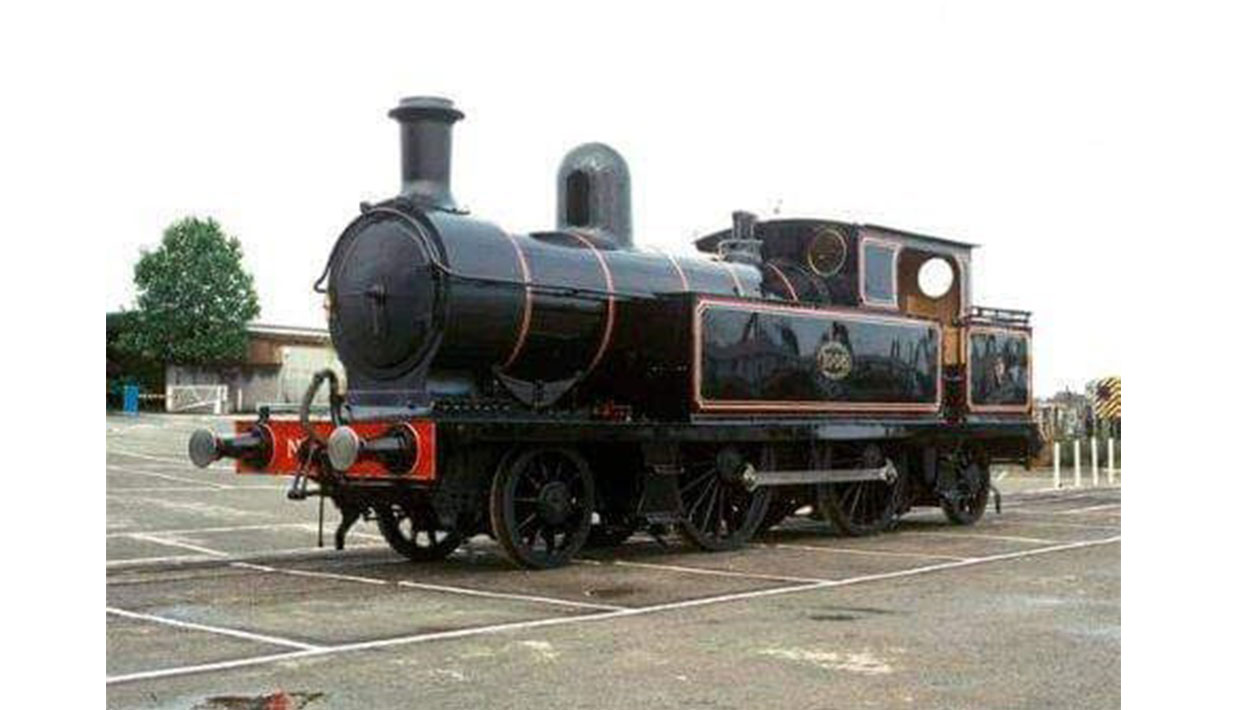
1008 – the first Locomotive built on Horwich Works
The words of HE O’Brien, Works Manager in the early years of the C20th echo down the years as testimony to the quality of the town & its people. “Horwich was a great railway town, its engineers were inventive & efficient and made a big contribution to the development of the railways. The people were the best – so friendly, so good-hearted, I’ve never forgotten them”.
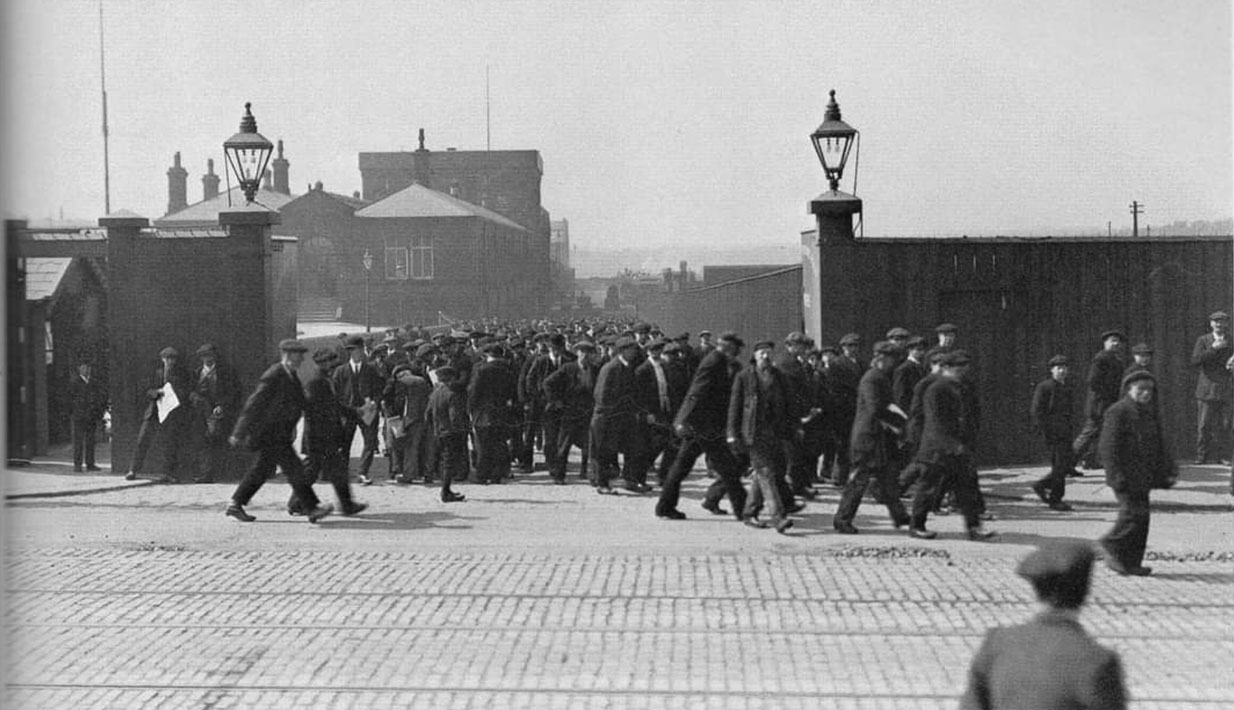
Railway workers heading home at the end of the day, early 1900s.
These gates were just to the right of where you are standing
At its peak the Works employed over 5000 people. It transformed this once sleepy Lancashire village into one of the 6 leading railway towns of Great Britain, making a major contribution to our industrial development and having an impact across the world. It changed for ever the lives of the original villagers and the 1000s of newcomers who came from all over the country to work here.
But by 23rd Dec. 1983 few of the workforce remained as the last railway workers made their way out of the Loco Works for the last time. And railway production finally ceased.
The story of those 97 eventful years of railway history is one of a time when the Works and its fortunes dominated the lives of the people of Horwich. It provided not only their employment but their social, recreational & educational needs through the Railway Mechanics Institute, the famous RMI – whose legacy still lives on in the town today, the ‘RMI’ club still stands just across the road from where you are standing.
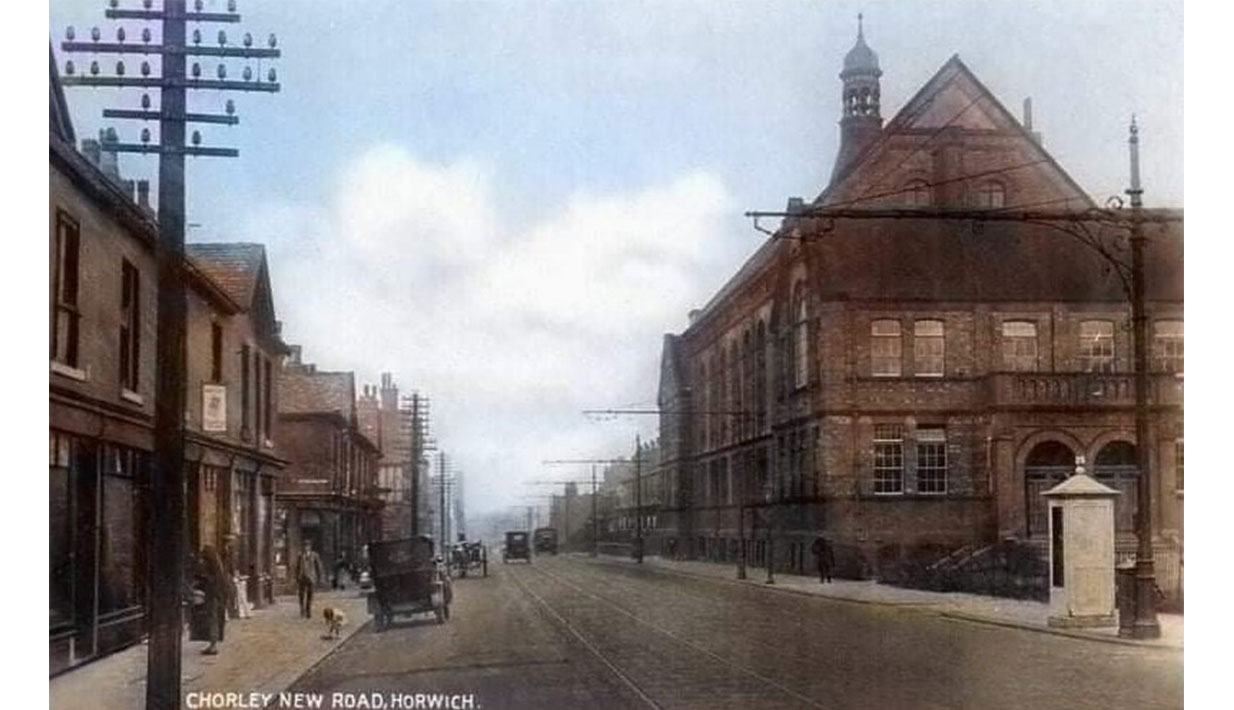
The Mechanics Institute (on the right) built between 1888-93. Demolished 1976.
Many families can trace several generations of their relatives who were employed on the Works. The Horwich we know today is still based on the new town created by the arrival of the L&YR Co. over a century ago. And there are many landmarks still standing to remind us of that time. And yet it could all have been so very different …. But for a twist of fate, Horwich might never have been chosen as the site for the new L&Y Railway Works which, in the 1880s was urgently required to replace the inadequate facilities at Miles Platting & Bury, and the sleepy village might have slumbered on relatively untouched by the industrial age or been developed in a completely different way. It wasn’t even on the shortlist of sites that the L&Y Board were considering in 1884 until an estate in Horwich was spotted by Elias Dorning, a surveyor working with the Board’s main advisors, John Ramsbottom and William Barton-Wright. The estate was due to be auctioned at the Mitre Hotel in Manchester on 27th May so time was of the essence. The Directors liked what they saw and the whole estate of 736 acres including the Works’ site and land at Wallsuches, Makinson Moor & Pilkingtons was purchased for just £36,000.
In Sept. 1884 the L&YR Co. commissioned a layout plan for the Works with a spur from the main railway line into the 96 acre site which was situated between Red Moss and Chorley New Road.
The 1st building contract was let to Joseph Nowell for the foundations of the erecting shop on 9th March 1885 at a cost of £16,129, and the process which changed the course of Horwich’s history so dramatically had begun.
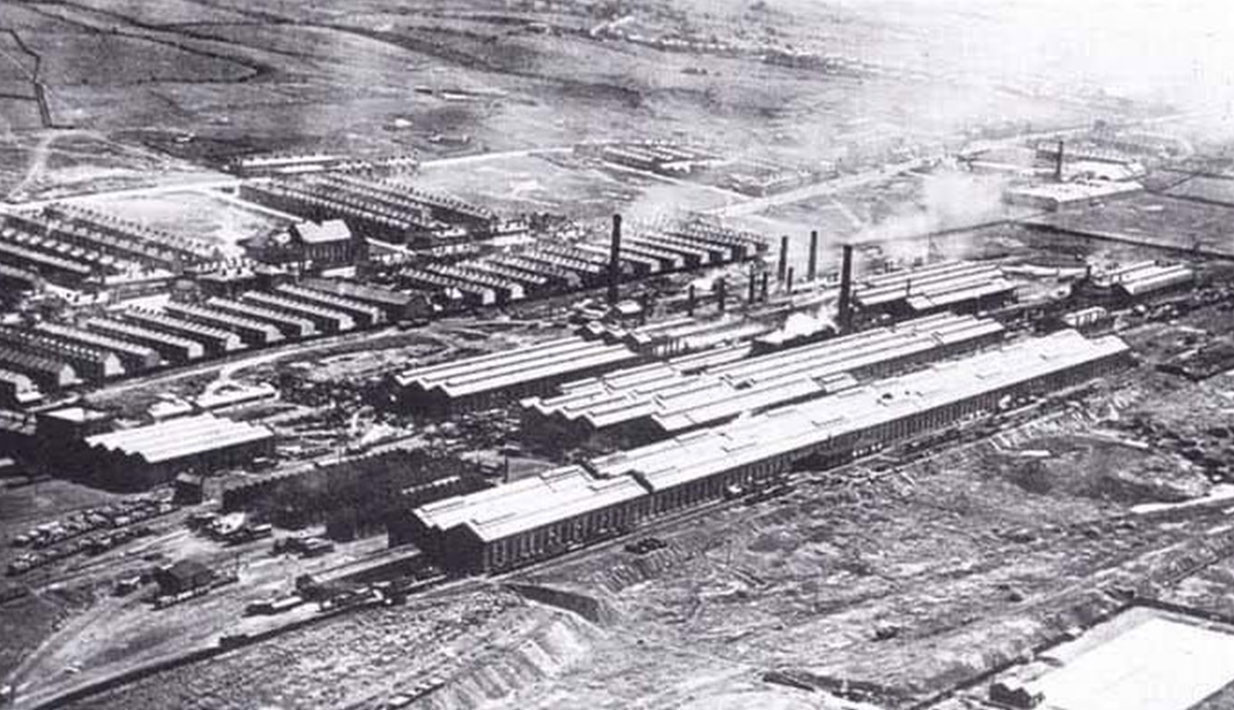
Horwich Works early 20th century
On 15th Nov. 1886, Horwich Loco Works was officially opened and the workforce, many of whom had been transferred from Miles Platting, began work immediately. The existing Horwich population of less than 4000, most of whom lived on the ‘top side’ in the vicinity of Wallsuches Bleachworks & Holy Trinity Church, were both intrigued and appalled at the prospect of a major influx of new residents, forecast by the Railway Company to be in the region of 7-8000. In 1881 the population of Horwich was 3500, by 1891 it was over 13,000 and by 1901 it was 15,000. A study of the census records of the time of a typical street near the Works, it can be seen that the new workers came from all over the United Kingdom with successive generations working at the Works.
Not surprisingly, the more than trebling of the population in 10 years placed an enormous strain on the town’s infrastructure which spilled over into social unrest. Everything was in a state of flux as the Local Board (council) strove to deal with the demands for new roads, services and social facilities, and to curb ‘jerry building’. This in turn required higher rates.
As the construction workers and the railway workforce converged on the town, there was a crisis in the provision of accommodation. Although new houses sprung up at a remarkable rate, built by ‘spec. builders’ on land provided by the Railway Co. (over 1000 in the first 12-18 months), it was not uncommon for the ‘navvies’ to live in tents on the massive Loco Works construction site and for rail workers to be crammed into any form of lodgings they could find – forcing up rents dramatically.
The strain was bound to tell, and there was increasing tension both on the Works site and in the town, particularly amongst the navvies who were involved in mass gang fights in the streets of Horwich. As the Works grew, industrial relations were generally good but, with so many trades being represented and membership of Trade Unions becoming part of the employment contract, strikes and lock-outs did occur, particularly in the early years.
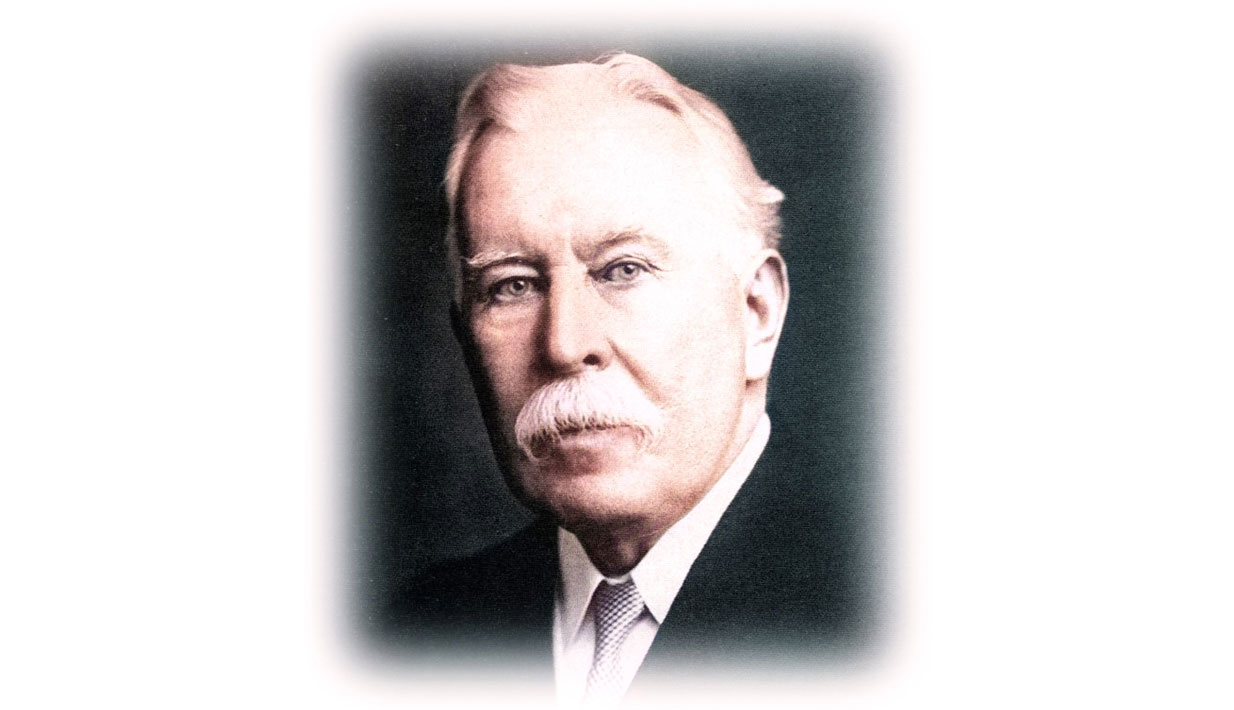
John Audley Federick Aspinall – ‘the Father of Horwich Works’
Still remembered in Horwich today, John Audley Frederick Aspinall has rightly been called the ‘Father’ of Horwich Loco Works. He was a protégé of Ramsbottom & Barton-Wright, the engineers responsible for laying out the Works site, having moved through the ranks of the L&YR Co. and in July 1886, at 35 years of age, he was appointed CME. Aspinall’s job was to oversee the construction work taking place, get loco production underway and build a community around the Works to house the workforce and look after their needs - quite some task but one he accomplished with great enthusiasm, dedication & foresight.
He not only laid the foundations of the Works but also the Horwich we know today and also found time to design locomotives, the first of which No.1008 rolled off the production line in February 1889, now preserved at the East Lancs Railway as a static display. As well as all this, he set up a premium apprentice scheme at the Mechanics Institute which became the envy of the ‘railway world’ and produced some of the leading railways engineers during the ‘glory days’ of steam railways – men like Sir Nigel Gresley and Sir Henry Fowler.
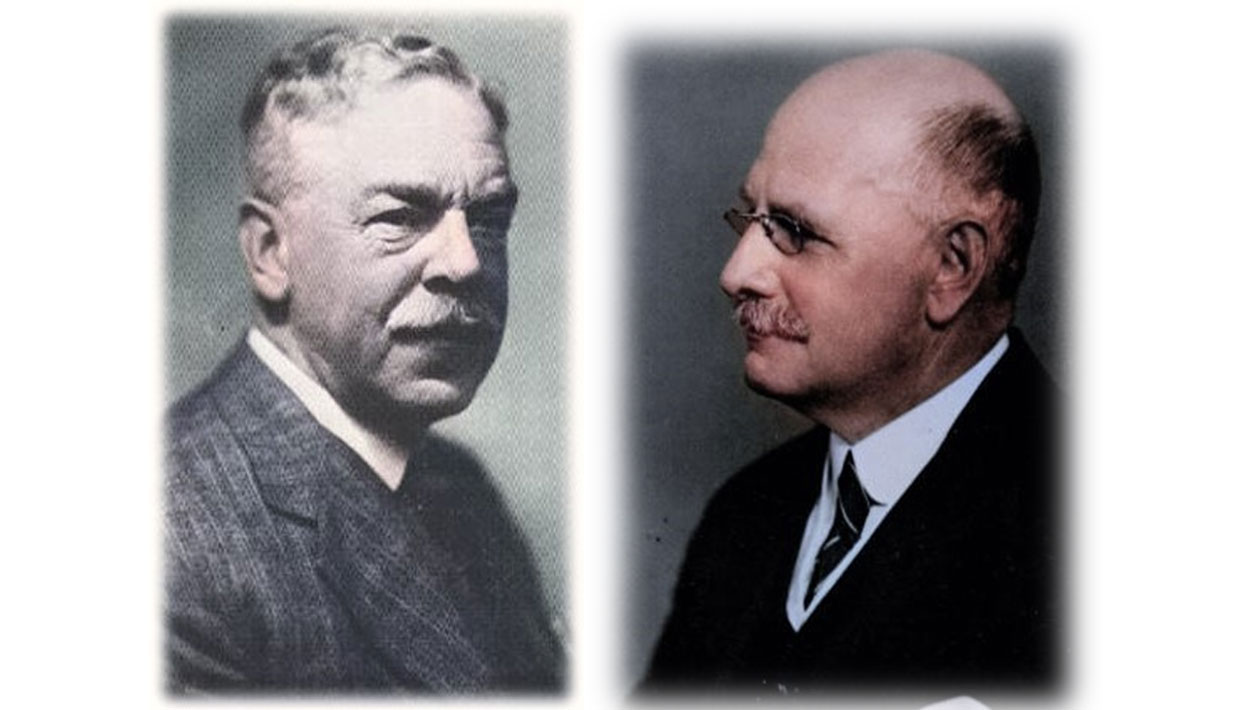
Left: Sir Nigel Gressley, at Horwich 1898-1904. Later became the CME in the LNER and designed the famous steam Locomotives Mallard and the Flying Scotsman
Right: Sir Henry Fowler, at Horwich 1887-1891 and later became the CME of the LMS.
Horwich Works played an important role in the production of armaments in both World Wars, producing tanks & shells and it was during these time that women became part of the workforce.
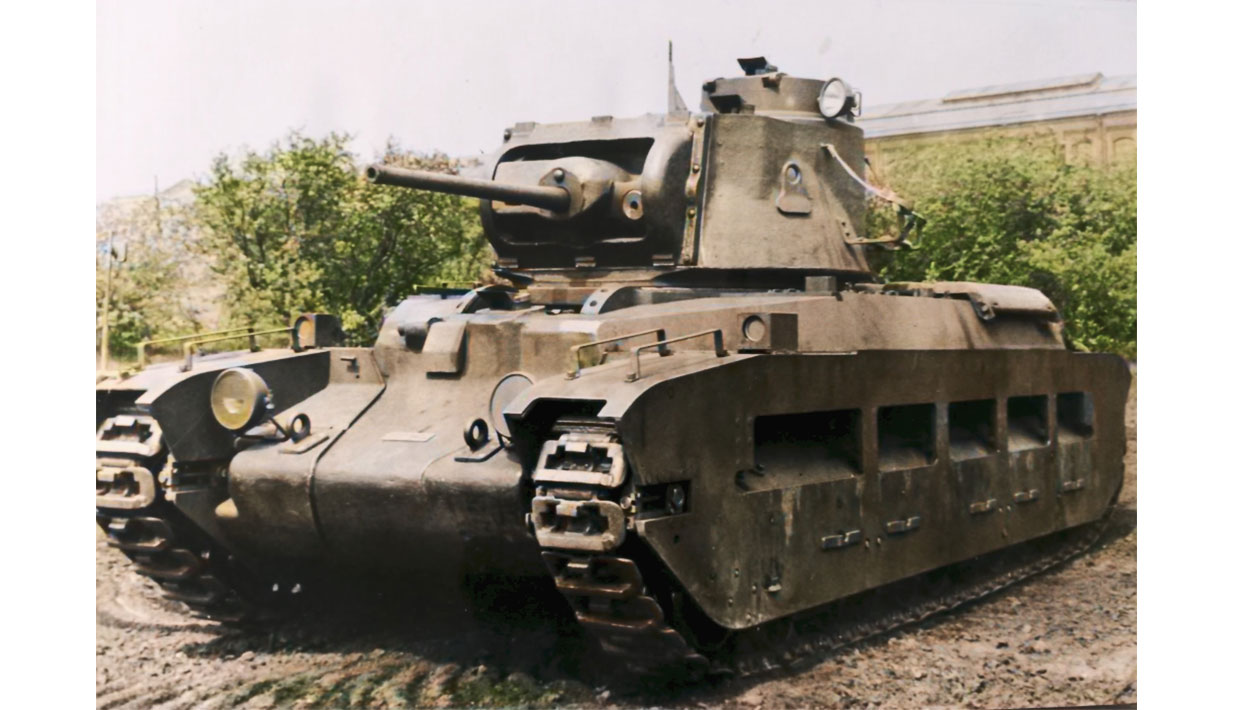
A Matilda Tank at Horwich during WWII, one of more than 400 built on the works
In the post WWII years, the Works became part of British Railways and diesel and electric trains gradually replace steam. The last steam locomotive was built at Horwich in 1957 and the last one repaired in 1964. But the Works went on for another 20 years producing diesel and electric units, carriages and wagons until its closure at the end of 1983. In its time, Horwich Works had a world- wide reputation and produced 1,830 steam locomotives and repaired 50,000 others, it produced 169 diesel locos and repaired thousands of wagons and other specialist rail maintenance vehicles.
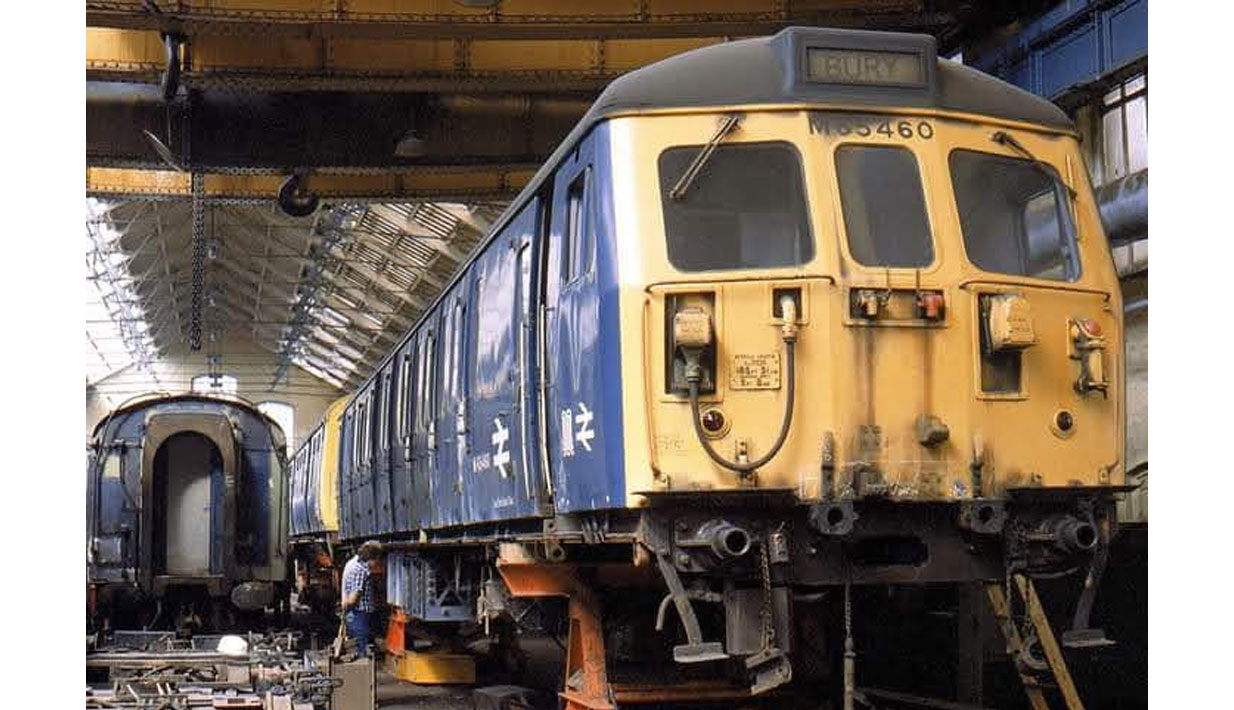
The Erecting Shop in the British Rail era with all types of Multiple Units being repaired.
Until quite recently the Works premises still dominated the skyline of Horwich as they continued as an Industrial Estate after the railway operations ceased. In 2008 the whole site was designated a Conservation Area, which should have afforded the buildings some protection.
However, a few years later it was earmarked as a ‘strategic development site’ and permission was granted for the building of 1700 houses and employment uses. With the whole site now under threat, it was agreed to retain 4 important ex-Loco Works buildings as part of the ‘heritage core’ (village centre). Unfortunately, of those 4 buildings, only the office block and pattern/millwrights shop now remain. The office block has a secure future as the HQ of ‘Fluent Money’, but the future of the patter/millwrights shop is uncertain. It is hope it can be retained as a ‘community facility’ for the expected 5000 new residents of ‘Rivington Chase’ with a ‘heritage theme’ based on the Loco Works’ famous history and with Horwich’s first locomotive, ‘1008’, as it centrepiece.
If you want to see more about the Horwich Locomotive Works then visit the Horwich Heritage Centre, Beaumont Road Horwich, BL6 7BG. www.Horwichheritage.co.uk.
We are Open Mon-Fri 2pm - 4 pm and Saturday mornings 10am - 12.30pm.
