

Kenneth fields looks back at Horwich Junior Technical School (2012)
Additional text & Photographs added by Derek Cartwright (2026)
Following a period of vandalism and a disastrous fire, one of Horwich’s most important buildings, the Railway Mechanics’ Institute (RMI) was finally demolished in 1976.
For many local people this was a poignant end to a landmark that had served them well for almost a century, being both a place of education and a venue for many social events. As a former pupil of the Junior Technical School that once formed part of this rambling Victorian edifice, I was particularly saddened by its passing for another important link had been severed from the town’s great engineering past.
The RMI was the brainchild of John Audley Frederick Aspinall, who was the Chief Mechanical Engineer at the newly built Horwich Locomotive Works. At this time, in the tradition of the great Isambard Kingdom Brunel, it was normal practice for an engineer to be in complete charge of major engineering projects. So in 1886 Aspinall convinced the Board of the Lancashire and Yorkshire Railway Company that a premium apprenticeship scheme was urgently required at Horwich. At this time British locomotive design was at the forefront of world engineering technology and he believed that to maintain this position technical education for up-and-coming engineers was essential.
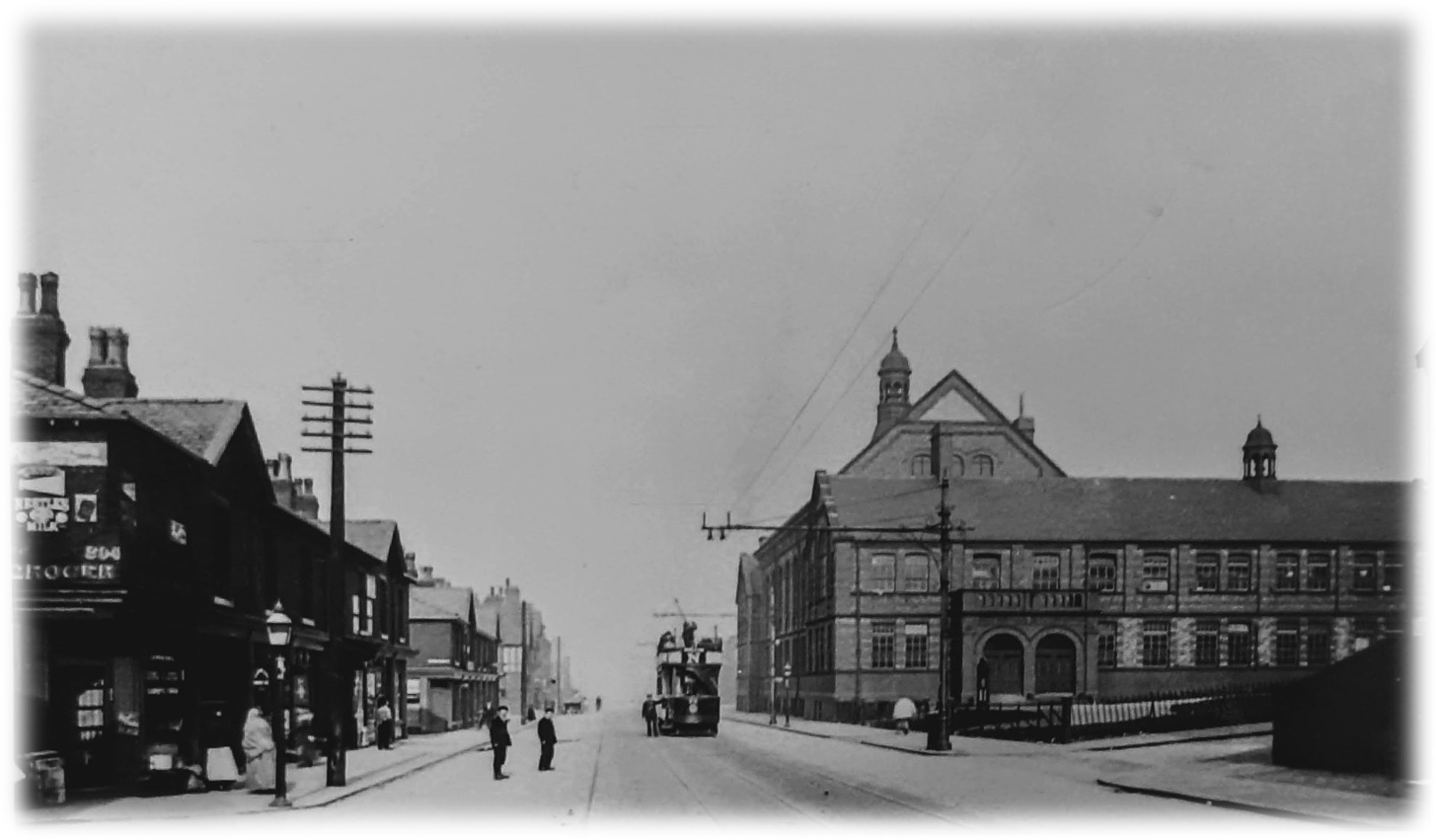
The Railway Mechanics Institute (RMI), Chorley New Road Horwich
The Board approved his request and the first phase of the building of the RMI was completed in December 1888. Shortly afterwards ninety fee-paying students were attending lectures in engineering science each week. This success led to the expansion of the premises with the building of two large wings in 1893. Having funded part of this development the wealthy widow of Samuel Fielding named one wing after her late husband, who had been a Director of the L & Y Railway Company. Also at this time a fine new Gymnasium, engineering laboratories, a library and a large hall were among many new facilities added.

The first part of the Mechanics Institute built 1888 before the later sections were added in 1893

Original building drawings for the Railway Mechanics Institute (RMI), circa 1887. (Horwich Heritage Archive)
The number of people employed at the loco works had now risen to 3,600 and there were 1,495 members of the institute. George Armytage, who was the Chairman of the L & Y Railway, declared the new building open. In his address he said that not only the employees of the railway company, but also the inhabitants (of Horwich) would make free use of the building. This comment received applause.As well as maintaining its reputation for high-quality technical education over the next half-century the RMI also became the hub of recreational activities for Horwich. Dances, evening classes, concerts, lectures and amateur dramatics were held on the premises and many sporting clubs were formed that proudly added RMI to their title.
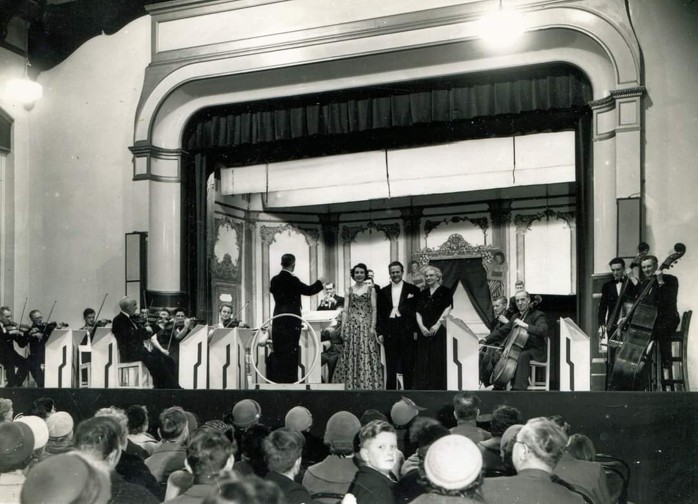
A stage show at the Mechanics Institute 1960s
The railway company had originally provided the teaching staff funding, but eventually this was taken over by the Lancashire County Council. The ever-changing world of education saw the first Junior Technical School in Lancashire being opened in the RMI in 1929. And it was in September 1954, at the age of 13 that I became one of the intake of about 50 new pupils to this now well-established school that formed part of the Horwich Technical College. At this time only a small number of pupils actually came from Horwich, the others travelling each day from surrounding towns. Our pristine school uniform on that first day consisted of grey trousers, and a navy blazer and cap. The school badge, on both the cap and the blazer, contained a red and white rose: the emblem of the L & Y Railway.
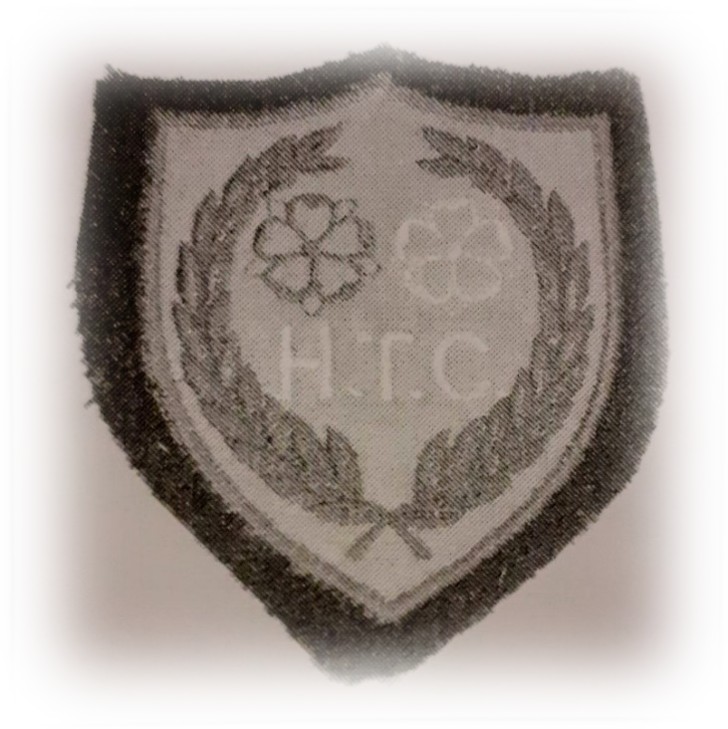
The Uniform badge of the Horwich Junior Technical College
On first arriving at the school we were separated into two classes of about 25 pupils. The top class was named Alpha-Beta and the second was Gamma-Delta. The use of the Greek letters baffled us at first, but it quickly became accepted, being an introduction for us to the Greek alphabet that is used extensively in engineering science.But the greatest shock for the new pupils was the amount of work they were expected to carry out. Each day our lessons continued for one and a half hours longer than other local schools and often we had up to two hours of homework each evening. Discipline was strong, but corporal punishment and detention were banned. Instead, when punishment was needed, it was normally confined to writing an extra “two-page essay”, which on the top of the heavy workload was punishment enough.
For each subject studied we were given a blank exercise book and for reasons unclear, it was emphasised that the covers had to be immediately protected with brown paper. We were punished with a “two-page essay” if this task was not completed. One of these exercise books used as a general notebook, was curiously known as an “Omni”, being an abbreviation for “omnibus”.
A well-liked local man, Earnest Blackmore (retired 1961), was the headmaster at this time and the driving force behind the school’s dedicated staff. As a highly qualified and experienced engineer himself his aim was to give us two years of concentrated engineering, engineering and more engineering! This meant that most non-technical subjects, such as arts and crafts, religion, foreign languages and music were not taught. Our history lessons seldom mentioned kings and queens but were more about the lives and achievements of the great engineers of the past. Many of these were also commemorated by the names of the streets that surrounded the RMI. And our geography lessons concentrated on the raw materials and manufacturing output of foreign countries and little about their politics.
The core subjects taught were Mathematics, Engineering Science, English and Technical Drawing, together with Metalwork and Woodwork. We were assessed three times each year by examination. The long-term aim was for pupils to continue their studies to gain National and Higher Certificates in Engineering and for the more able to become members of one of the Engineering Institutes.

The science laboratories at the Mechanics Institute. Early 20th Century
From time to time “Ernie” would interrupt our normal lessons to give us an informal “brain-storming” session, during which we could ask him a technical question on almost any subject. He would also often remind us that the school’s most famous pupil was the aircraft pioneer, Sir A. V. Roe. In the second year we went on a school visit to the AVRO aircraft factory near Manchester to see the manufacture of the impressive Vulcan Bomber, which was one of many aircraft that had grown from his inspiration. It was pointed out that much of the engineering apparatus still being used at our school had also been used to teach him the basics of engineering.

Sir A. V. Roe, aircraft pioneer and pupil at the Horwich Junior Technical College.
In 1961 the Junior Technical School moved to new premises, as part of the Collage of Further Education on Victoria Road in Horwich. The Mechanics institute then passed fully to the education authorities and in the same year the first year of pupils of the Horwich Secondary School received their education at the Mechanics.

The Mechanics engulfed in flames 6th October 1976
The last pupils spending a year at the Mechanics was the school year of 1973/74, this was the first year of the new Rivington and Blackrod High School (comprehensive). When these pupils moved up to their second year at the Albert Street site in Horwich the Mechanics Institute building was closed. The building remained empty and derelict before being destroyed by fire on 6th October 1976. Soon after the site of the Mechanics was cleared and used for new residential housing.The last pupils spending a year at the Mechanics was the school year of 1973/74, this was the first year of the new Rivington and Blackrod High School (comprehensive). When these pupils moved up to their second year at the Albert Street site in Horwich the Mechanics Institute building was closed. The building remained empty and derelict before being destroyed by fire on 6th October 1976. Soon after the site of the Mechanics was cleared and used for new residential housing.
