


EARLY HISTORY
In 1620, Horwich was a small settlement of 48 tenant pastures, part of the estate of Sir Thomas Barton.
This had been passed down from the Norman Barons of Manchester who had presided over the Royal Hunting Forest which covered a large area around Horwich for several hundred years after the Norman Conquest. The main activity in those years was subsistence farming with the wealthier farms being up on the moors above Horwich, where hand loom weaving supplemented the meagre family income. Cloth was washed & bleached in the local streams running down off the moor and, although this activity was very small scale, it contained the elements that were to lead to the transformation of these tenant pastures into significant bleaching operations within the next 100 – 150 years.
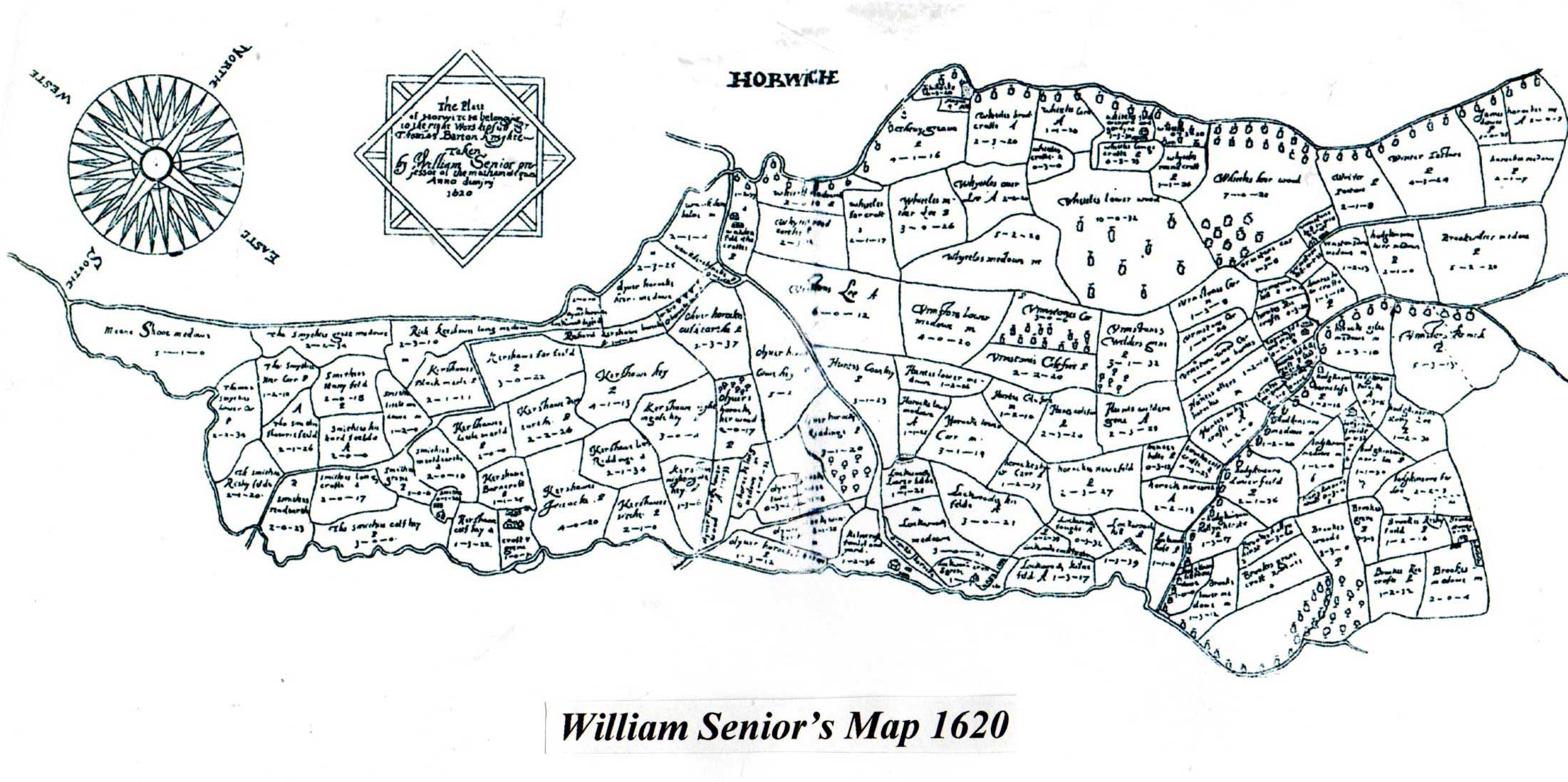
Thomas Hampson in his ‘History of Horwich’ describes Horwich in the 1700s as a ‘bleak and cheerless place’ with only a few scattered, insignificant buildings making up a hamlet of just a few hundred people. However, thanks to its moorland setting, which generated numerous streams and rivulets, the area possessed the essential ingredient for what would initially create a local bleaching industry and then provide the means of motive power – water, and lots of it!. Bleaching at that time used the old ‘atmospheric’ system whereby cloth was washed in sour milk or urine and stretched out across the fields on tenterhooks to dry. And we have a number of accounts to suggest this was quite widespread in Horwich in the 17th & 18th centuries – for example at Bolton Fold & Gorton Fold. But this was essentially a ‘cottage industry’ with cloth taking weeks to dry out and be ready for market. Something much more organised and efficient was necessary to make it a substantial industry and, at the end of the C18th, it was vital that this process was transformed to keep pace with the increasingly mechanised means of textile production arriving in the cotton mills of Bolton & beyond – which was massively increasing the demand for bleached cloth. The pivotal moment was the introduction of chemical bleaching using chlorine and other chemicals to rapidly speed up the bleaching process. And there was one family in Bolton who recognised the importance of this breakthrough and were determined to seize the opportunity: THE RIDGWAYS - and in doing so they transformed the fortunes of the humble hamlet of Horwich.
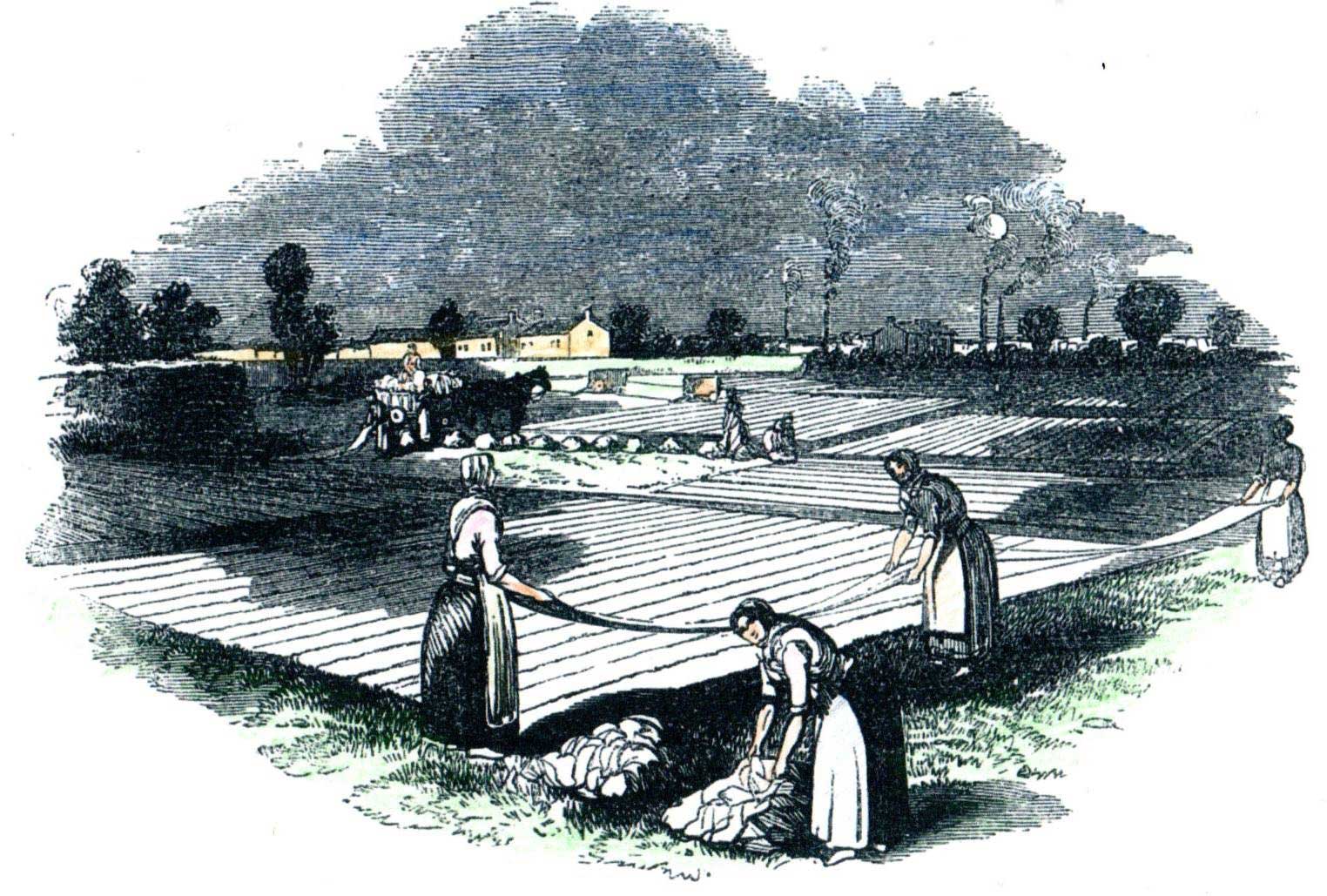
Atmospheric bleaching took place at locations like Gorton Fold (1714).

WALLSUCHES BLEACHWORKS
Brothers John & Thomas Ridgway were originally bleachers at Dog Brow, Bolton (which is now the site of the Market Hall), but a fire at their premises in 1775 prompted them to look for a larger site and they took out a 99 year lease on land at Wallsuches in Horwich in 1777.
As we have heard, Horwich at that time was a drab little place of only 365 people situated on the side of a bleak moorland, but the Ridgways must have recognised its potential for large scale, mechanised bleaching. And it is thanks to their foresight, power and influence that this tiny hamlet was turned into a thriving village community during the next one hundred years. Incidentally, no one seems to know the precise origin of the name ‘Wallsuches’. It is certainly not on any historic maps of the area but could be derived from the old English words wella (water) and sac (soak). A less likely definition is that it is said to have originated from the way the Ridgways issued their building instructions namely “We’ll have another wall at such and such tomorrow”. Not an entirely convincing explanation!
Thomas Ridgway was the driving force behind the Horwich operation and within 3 years had built a bleachworks requiring 6 water wheels to drive the machinery. The business expanded rapidly drawing in workers from the surrounding area, and with the coming of age of his 2 sons, Joseph & Thomas, it became Thomas Ridgway & Sons, one of the largest and most advanced bleaching firms in the country. The Company quickly adopted the latest chemical bleaching processes and in 1798 were one of the first to introduce Boulton & Watt steam engines to replace water power. They also pioneered the use of the ‘glazing calender’ to finish cloth and must have been a major producer of gingham cloth since they named their main 5 storey structure ‘Gingham House’.
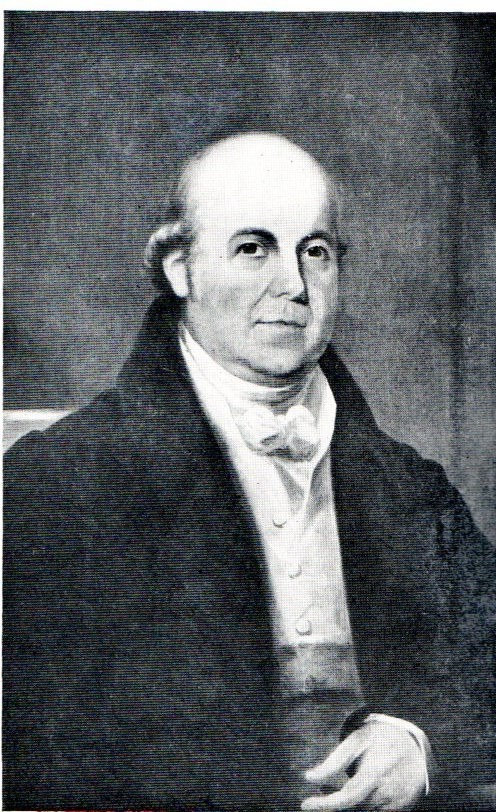
Thomas Ridgway

Joseph Ridgway
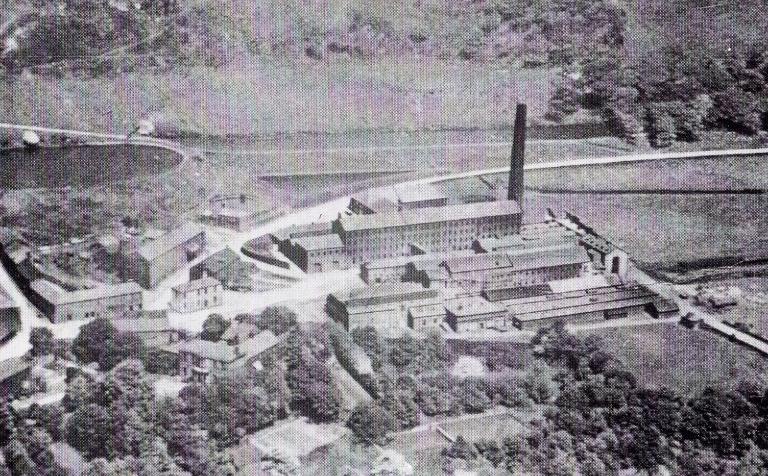
The Wallsuches bleachworks complex expanded rapidly from 1797 - 1850
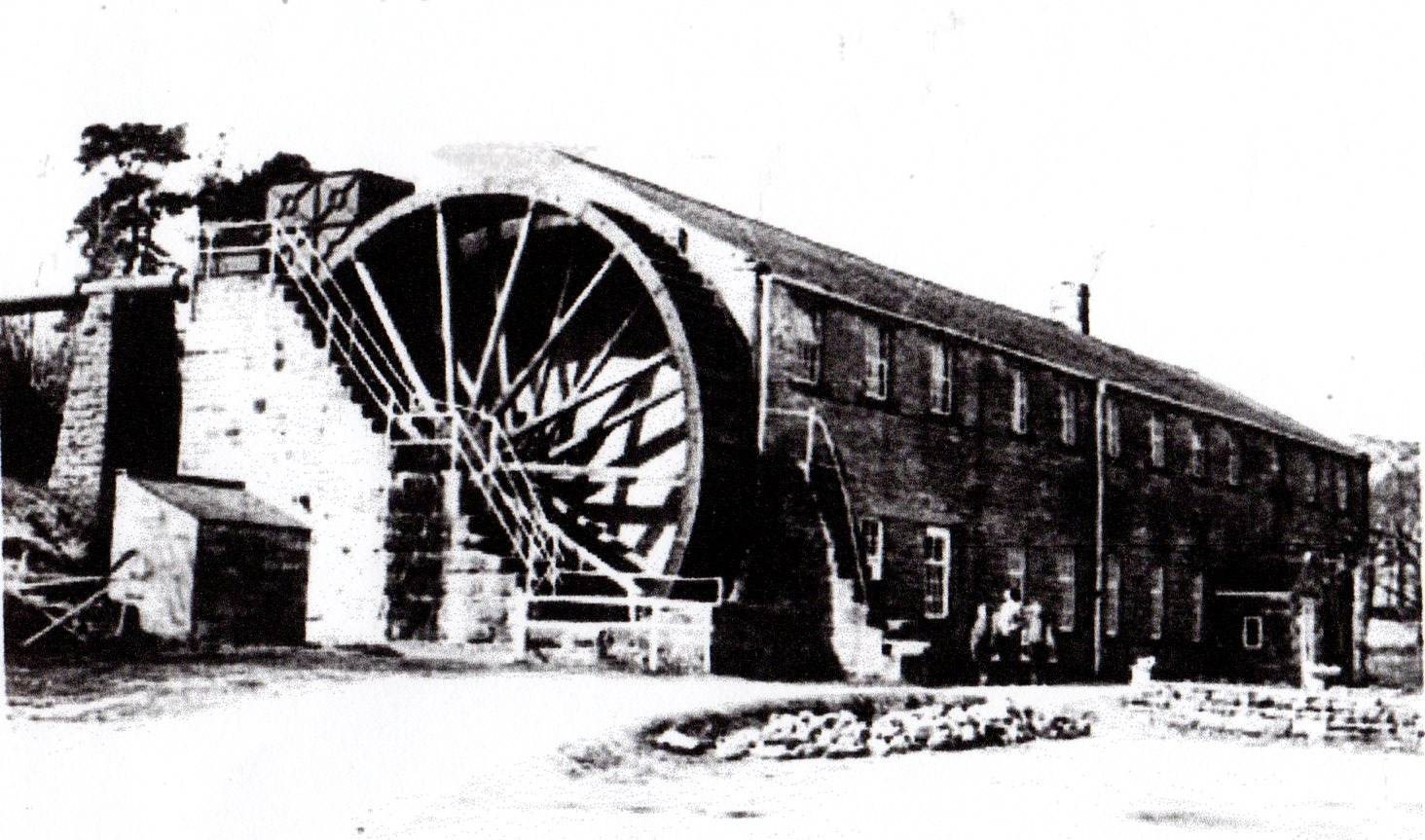
One of 6 waterwheels on the site

Wallsuches quickly moved on from water power to steam power by 1798, installing a Boulton & Watt steam engine
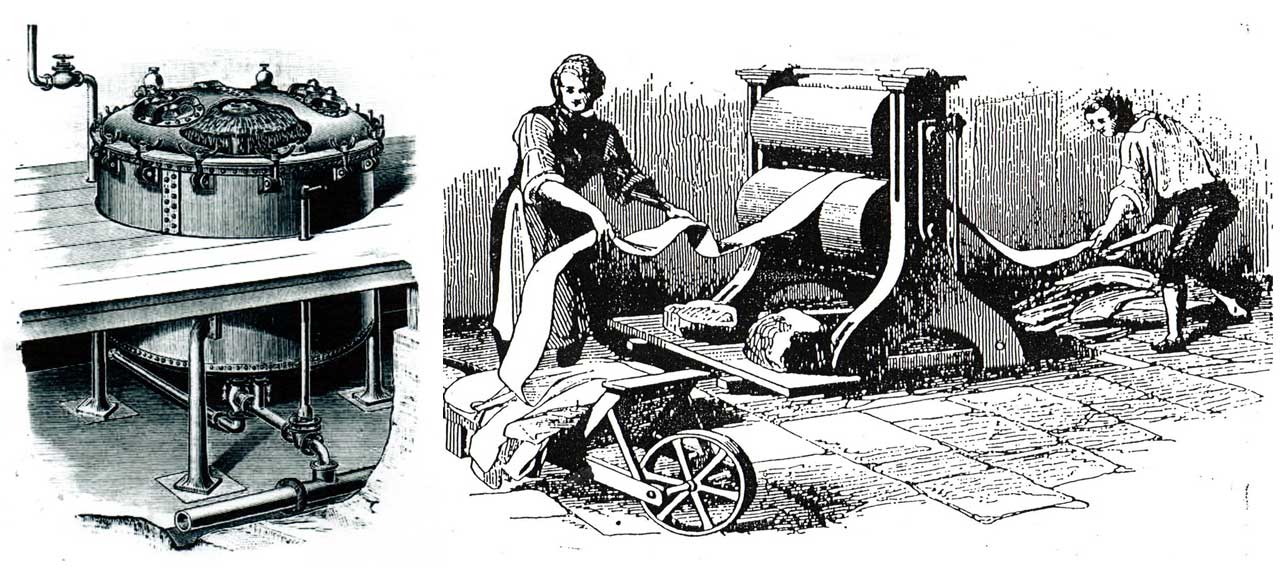
The cloth boiling (kier) and finishing (calender) processes
For the time, the Ridgways also seem to have adopted a relatively benevolent attitude towards their workforce with good rates of pay and conditions. Disloyalty or dishonesty were, however, heavily punished, as was the order of the day, and there is a record of one of their workers, John Boothman, being transported to Australia for stealing £20 worth of cloth in1802. Others weren’t so lucky, James Holland was one of a number of men executed in the Bolton area for stealing 30 yards of cloth.
The rapidly growing community needed guidance on how to properly establish itself and its facilities. This is where the Ridgways were at their most paternalistic and influential (some might say dictatorial!), particularly Joseph Ridgway. Looking down on the village from their home at Ridgmont, the family assisted with the building of the Parish Church School in 1793 and the re-building of the Parish Church in 1830.
They also set up a building club in 1802 to enable employees to construct their own homes. The attractive area of stone terraces directly opposite the Parish Church is still known today as the ‘Club Houses’. The Ridgways also presided over numerous local bodies using the Black Bull as their meeting place - with Joseph Ridgway becoming Chairman of the Local Magistrates Bench for many years – and they were instrumental in bringing the penny post to Horwich in 1815.
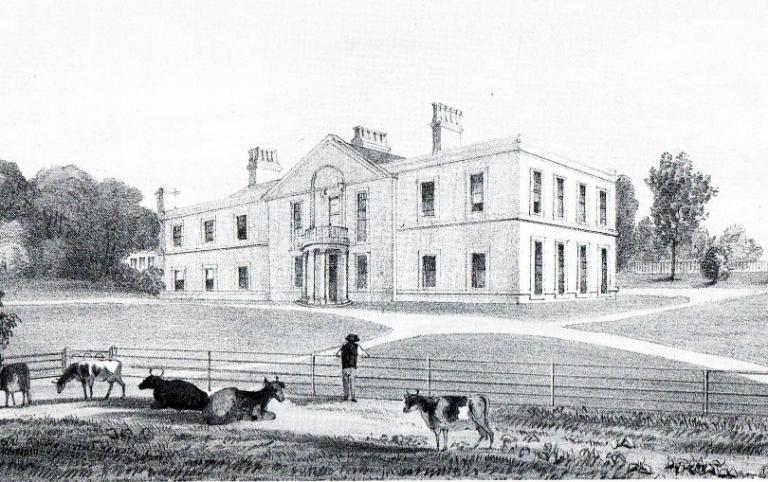
The Ridgways home at ‘Ridgmont’
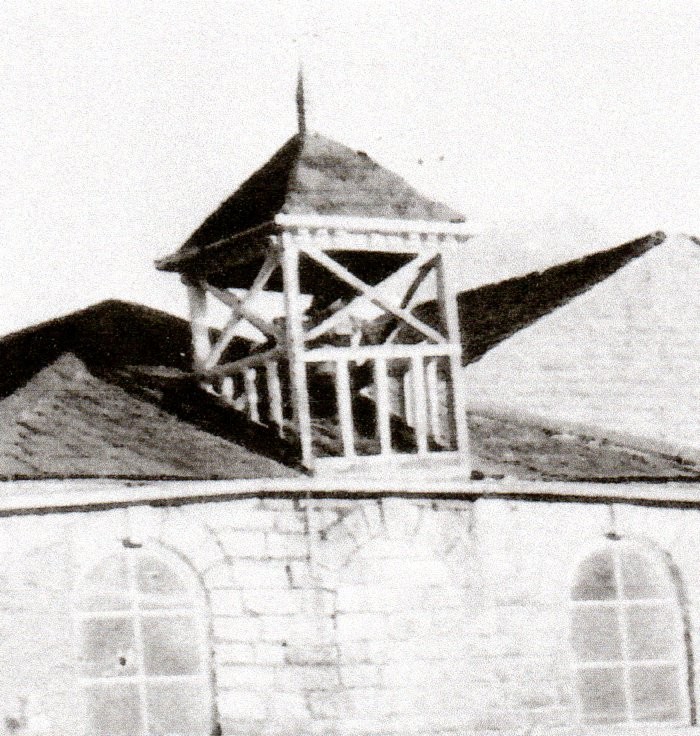
The Wallsuches bell (used to summon the workforce)
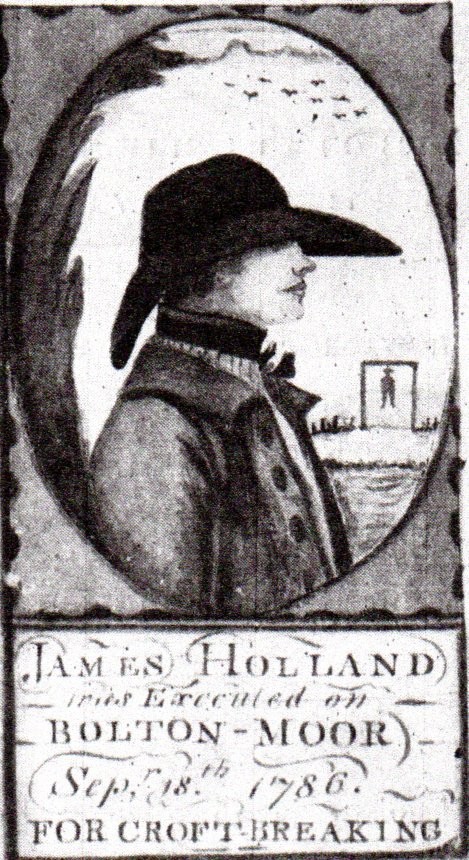
James Holland (hanged for stealing cloth)


The Club Houses early 1900s
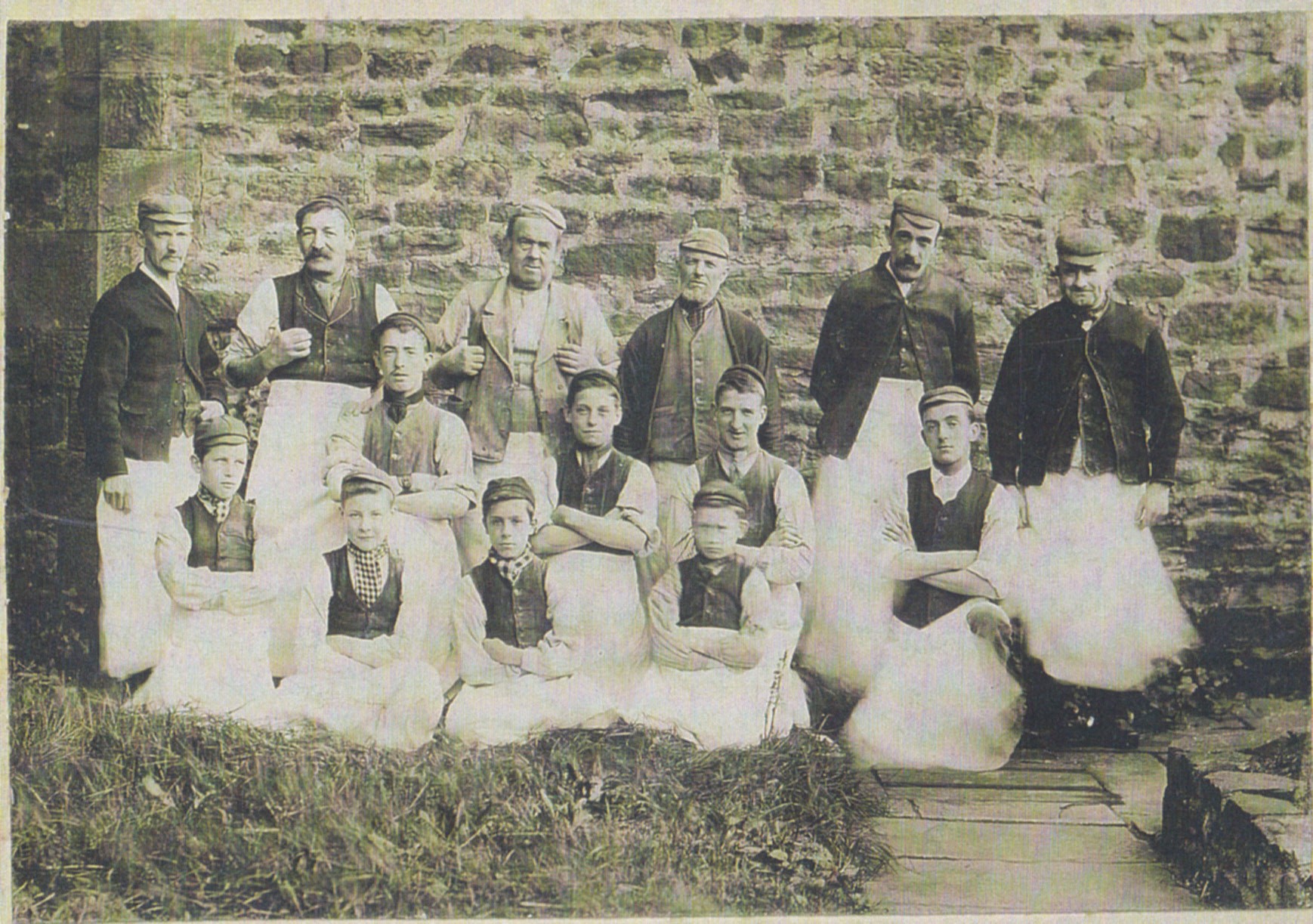
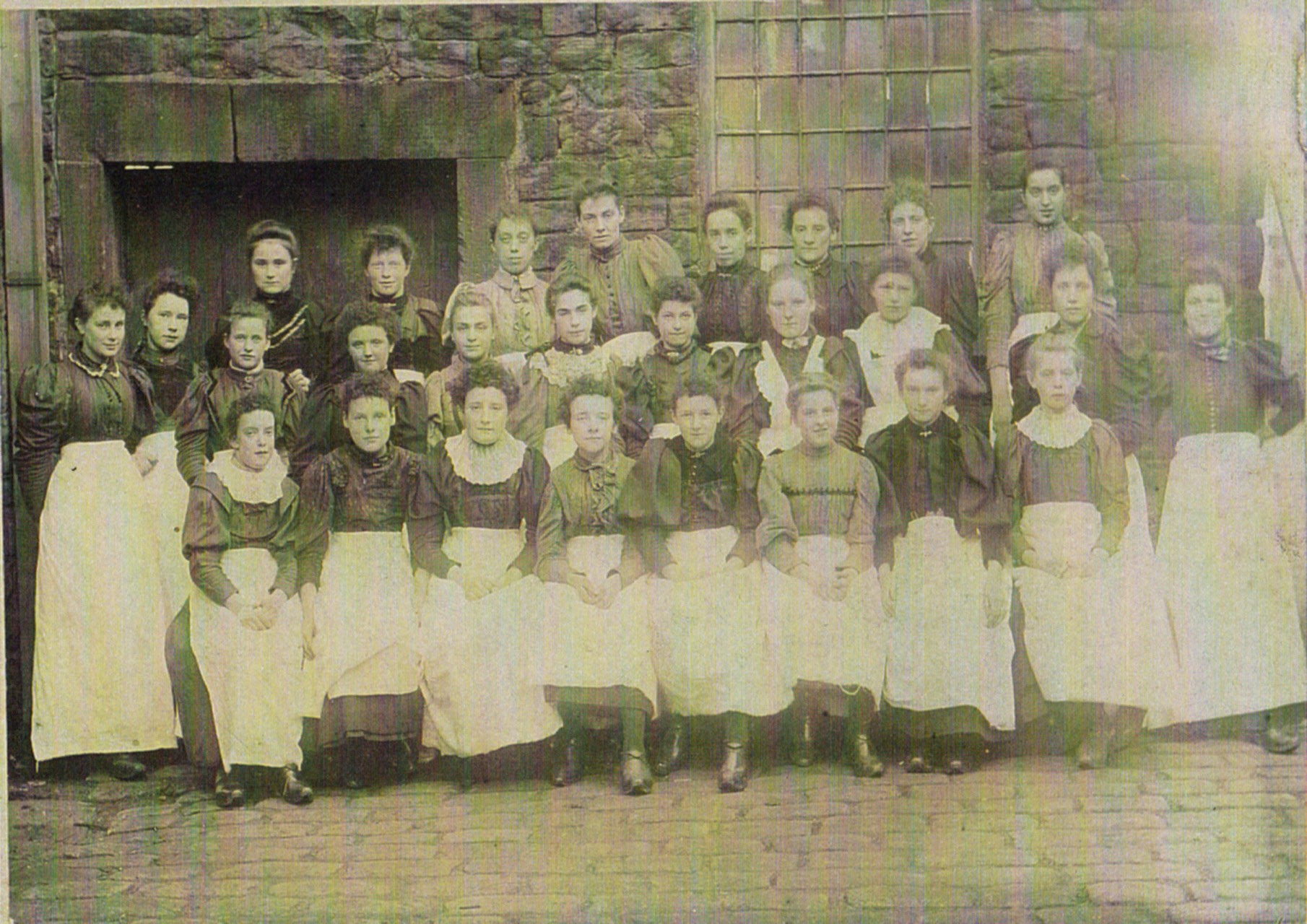
Groups of male and female workers c.1880
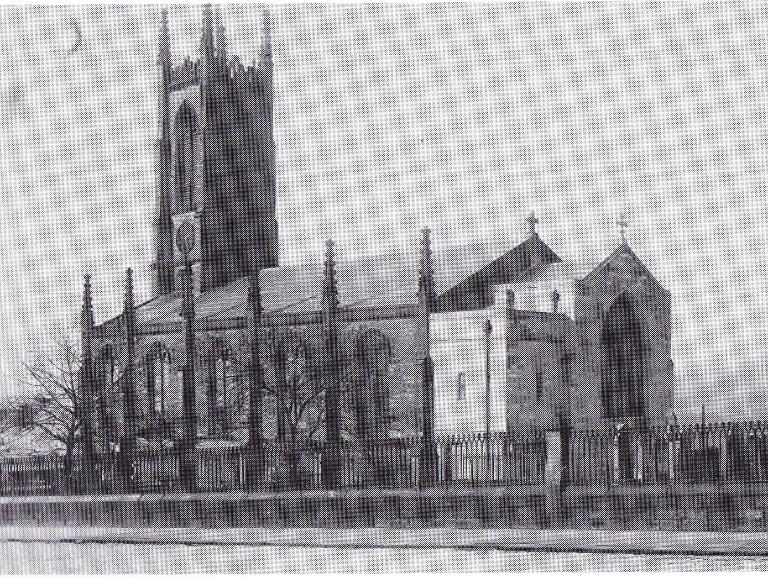
Holy Trinity Parish Church (1830)

The first Parish School (1793)

Parish School pupils (1910)
Wallsuches Bleachworks grew so large that it became a self-contained community with its separate, well-ventilated buildings and cobblestone roads, surrounded by large reservoirs with numerous quarries & mines on the moorland behind. With its ‘Truck Shop’ providing all the necessary goods for the workforce, it was in fact a village within a village which in turn provided houses, schools and a church – all just around the corner. And that old village community is still very much in evidence today in what we call the ‘Top Side’ of Horwich.
For over 200 years the Wallsuches clock & bell have stood as proud symbols of the legacy of bleaching on the site and it is fitting that they should form part of the new residential scheme now known as Arcon Village. Wallsuches was in fact the ‘heart’ of Horwich throughout the C19th for, without it and the Ridgways, the town would not have developed in the way it did. At its height, the bleachworks was a very busy place employing hundreds of people and employees would regularly work until 2 or 3 o’clock in the morning - after which they would lie down on a bale of cloth to snatch a few hours sleep before beginning work again at 6 o’clock. This could mean that for long periods male employees only saw their wives when they brought food to the works. Despite the long hours and dangerous conditions, jobs were secure and work plentiful, and there is plenty of evidence of three or four generations of a family working there. It was a ‘way of life’ with a ‘fair day’s work for a fair day’s pay’. The Ridgways were good employers for their time (despite employing child labour in the early years) who, overall, treated their workforce well and were concerned for their welfare. They even continued to pay their workers when there was little work during the ‘cotton famine’ of the 1860s brought about by the American Civil War.
‘Pay day’ at Wallsuches was an extremely important occasion both for the employee, his family and the community. By 1830, ‘such days’ as they were known, were regularised to once a month at which time the whole community came ‘out to play’ – dressing up, holding events, meetings and generally celebrating. Once payment became more frequent towards the middle of the C19th, this practice began to die out.
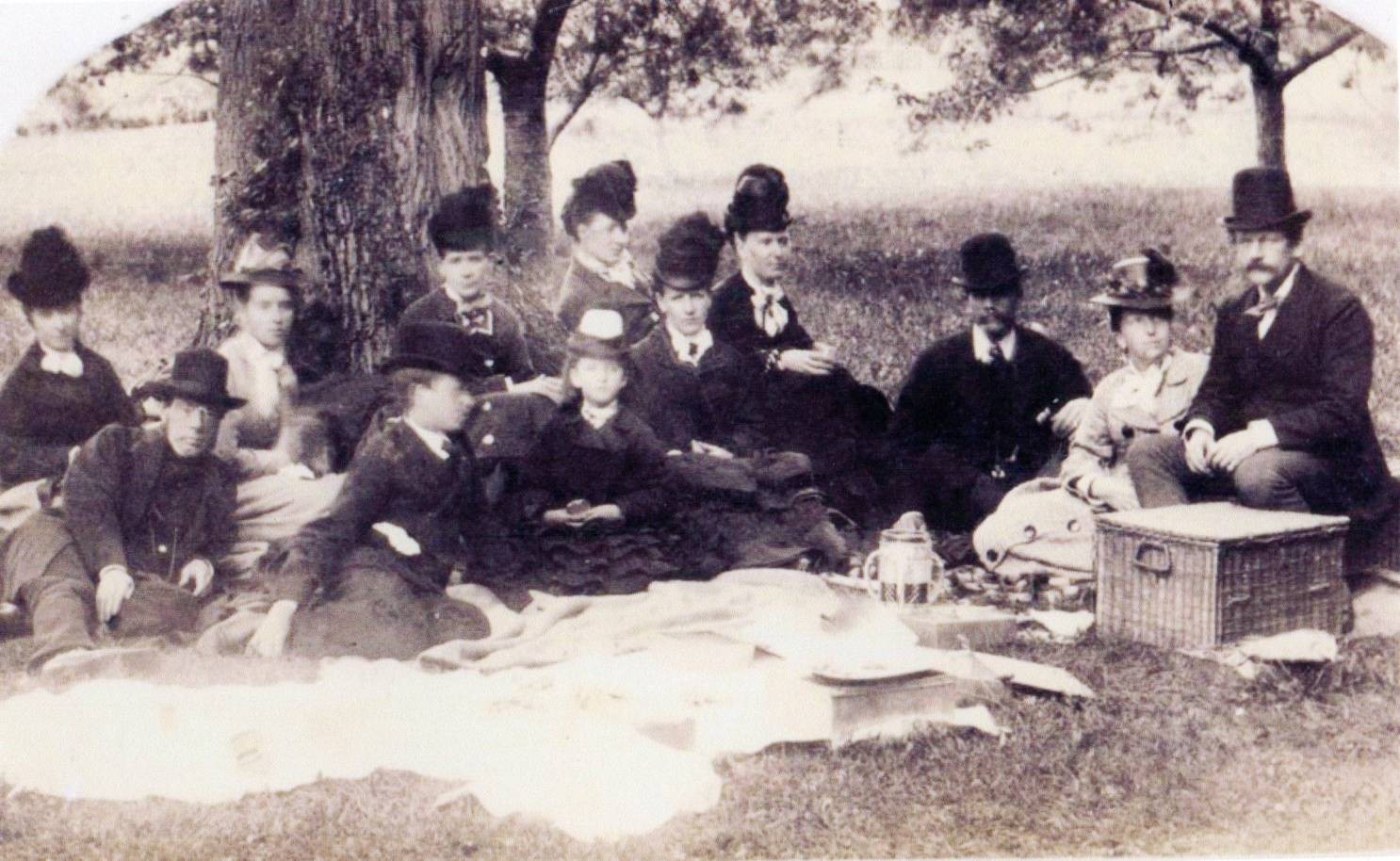
A village picnic

A village procession
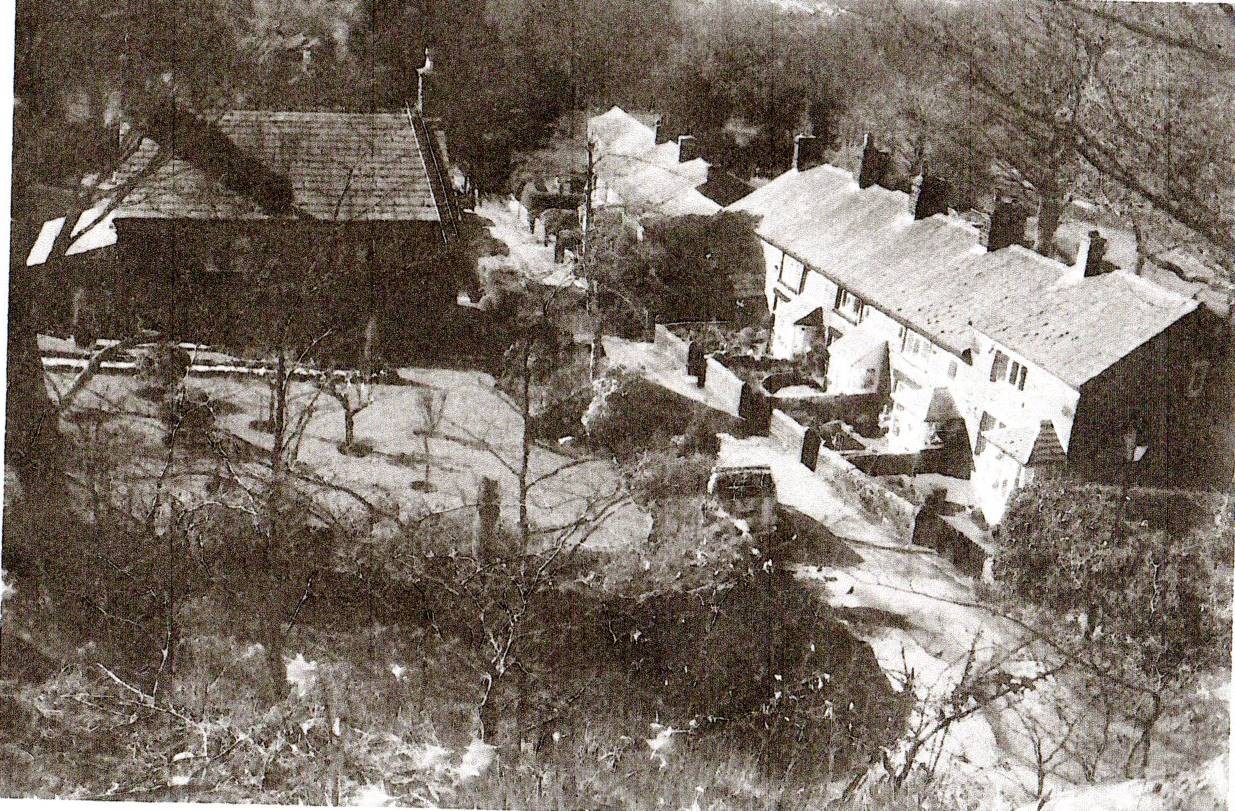
Fleet Street from the ‘Hill of Spite’
The contribution of the Ridgways to Horwich cannot be under-estimated. They gave a great deal to the community in terms of building a secure employment base where none had existed before, organising and funding religious and social life and laying the foundations for Horwich as we know it today. Joseph Ridgway was, in his own way, a model paternalist, creating an ordered and secure social world of steady employment, decent housing and good schools. Thanksgiving services, annual picnics and fetes, alongside regular work, made Horwich the envy of many other communities nearby and the villagers looked up to Joseph Ridgway as the ‘Father of the Parish’. However, his reputation was tarnished by a few ‘uncharitable acts’, the most notable relating to his disagreement with the Reverend Hewitt. Unfortunately, his generosity in contributing a sizeable amount of money to the building of the new Holy Trinity Parish Church was overshadowed by a bitter feud with the vicar - which could well have been about who was the most powerful man in the village! This resulted in Joseph Ridgway erecting a mound between his house at Ridgmont and the vicarage on Fleet Street with a statue of his favourite racehorse ‘General Jeffrey’ on top of it (ostensibly to commemorate the horse’s death).
This ‘Hill of Spite’ still remains in the corner of Ridgmont Park and is now more respectfully known as Daffodil Hill. This rift was never healed and when Joseph Ridgway died in 1842, all the bequests in his will benefiting the Parish Church were suspended until Reverend Hewitt left the parish - which he eventually did 10 years later. Joseph Ridgway was buried in the family vault in the Parish Church, of which he was such an important benefactor. Given the nature of the man, it is perhaps not surprising that the beautiful white marble statue in there, which he commissioned before his death, shows his wife kneeling at prayer in front of him! He was obviously someone of great importance to the development of Horwich and it is clear that as a result he expected to be respected and given due deference. In lavishing so much time and money on the Parish Church, he was also perhaps trying to secure his place in heaven as well as on earth!

Joseph Ridgway’s memorial
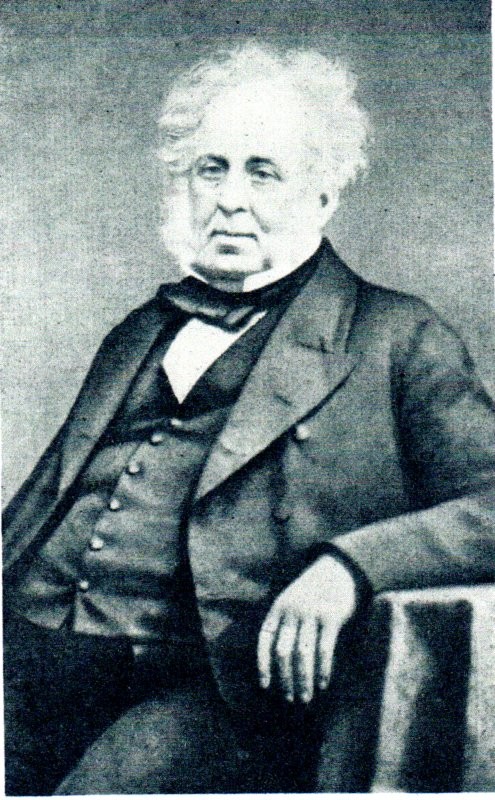
Thomas Bridson
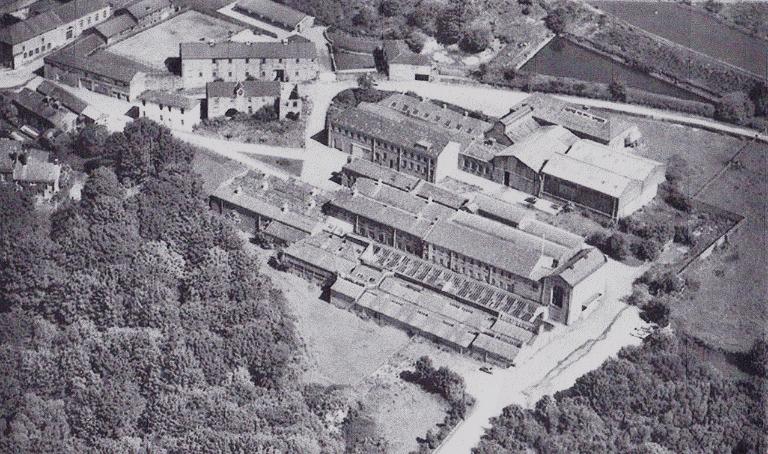
Wallsuches Bleachworks c. 1933
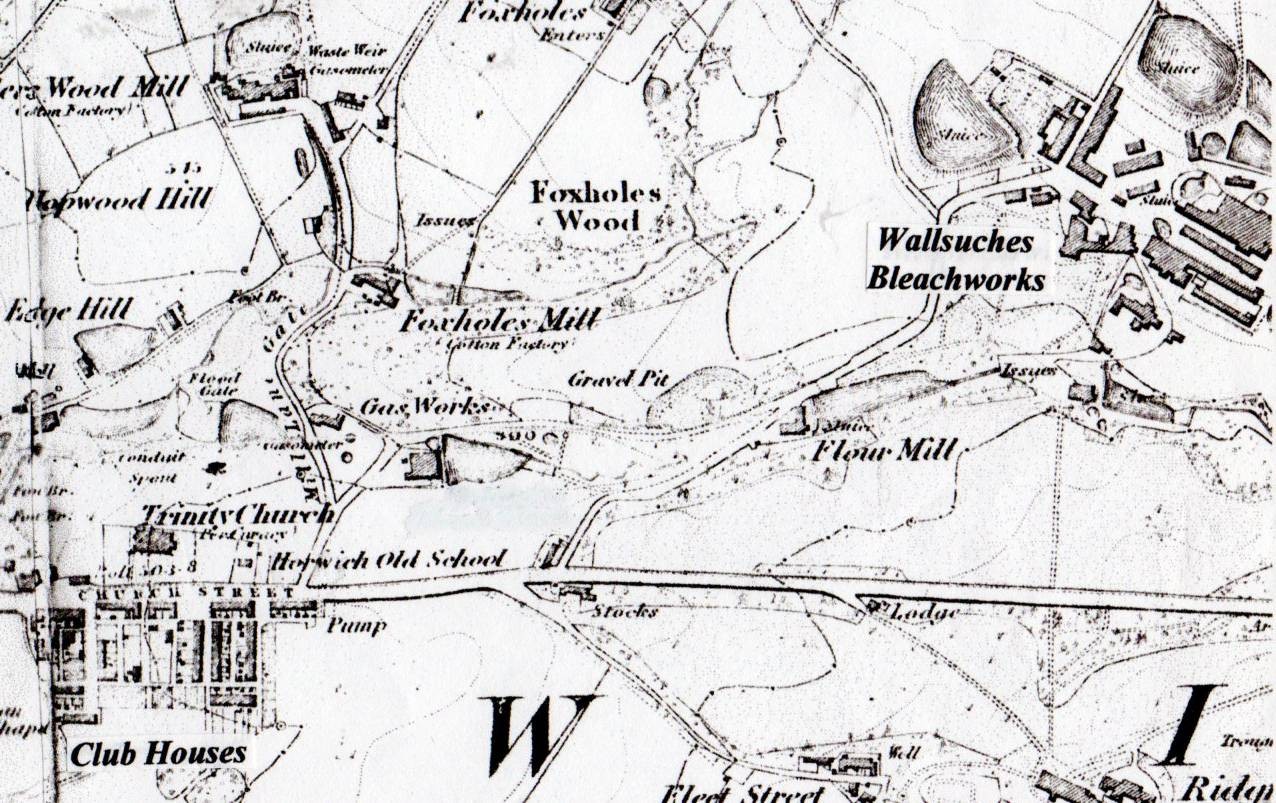
Wallsuches Bleachworks and the Club Houses 1849
Despite the death of Joseph Ridgway in 1842, the business continued to prosper. Since he had no heir, the family line was continued through his brother Thomas who died in 1879. The Ridgways also entered into 2 partnerships: firstly with their nephew, Thomas Bridson between 1818 and 1834 and later with 2 long-standing employees, Charles & Christopher Howarth, who eventually became sole owners of the business. The firm continued until 1900 when it was sold to the Bleachers Association.
When the bleachworks closed in 1933, it marked the end of an era for Horwich – a 150 year association which had seen a total trans-formation from a remote hamlet chosen by the Ridgways as the site for their new bleachworks to a dynamic industrial town, now dominated by the giant Locomotive Works. Horwichers will always be indebted to the Ridgways for coming to the area and doing so much to establish the attractive town we know today. And fortunately, many features of the Ridgway era remain: the Parish Church, 2 Parish Schools, the Club Houses and Ridgmont House are living monuments to their philanthropy and, despite falling into disrepair during the post war years as part of Arcon Engineering, Wallsuches Bleachworks has now been given a new lease of life as ‘Arcon Village’ thanks to a sensitive & enterprising redevelopment scheme by Redrow Homes – a fitting tribute to the town’s great benefactors.
New development at ‘Arcon Village’
